Kitting, Labelling and Phased Deliveries for Restaurant Rollouts
How to pack, label and deliver restaurant furniture by store: kit definitions, carton labels, packing lists, container plans, phased deliveries and receiving checks.
Short answer: Kitting means packing each store's furniture as a complete, self-documented unit: every carton labelled with store number, zone, item code, revision and "carton x of y", plus a store packing list and an install sheet keyed to the floor plan. Kits can ship one store per container, several stores per container, or one store in phases. Done well, kitting turns receiving into a checklist and installation into placing labelled pieces on a plan.
When a container arrives at a new store with 300 unlabelled cartons, the install crew spends the first day sorting. When two stores share a container and nothing says which carton belongs where, one store opens short. This guide sets out how we at Rollout Seat (a line by EASEN Commercial Furniture) kit and label furniture for multi-unit programs, and what chain logistics teams should ask any supplier to do.
What is a store furniture kit?
A store kit is the complete furniture package for one store - or one phase of one store - defined by:
- Store identifier: brand store number, city, opening date
- Item list: item codes, revisions and quantities from the format matrix, adjusted for the site plan
- Zones: dining room, bar, patio, private dining, waiting area, staff
- Phase: if the store receives furniture in more than one delivery
The kit list is issued with the order and becomes the reference for packing, shipping, receiving and installing.
What should a carton label show?
Every carton should carry a label on at least two adjacent sides, so it can be read in a stack. Recommended fields:
| Field | Example | Why it matters |
|---|---|---|
| Brand and store number | Store 0147 | Prevents cross-store mix-ups |
| City / site | Columbus, OH | Human check for drivers and receivers |
| Phase | Phase 1 of 2 | Separates staged deliveries |
| Zone | Dining - Wall C | Places the carton directly where it is needed |
| Item code and revision | BS-01 rev C | Confirms the right version |
| Item description | Straight booth module, 59 in | Readable without a code list |
| Position / run | Run C, position 3 of 6 | Sequence for long booth runs |
| Carton count | Carton 2 of 3 (this item) | Multi-carton items stay together |
| Kit count | Carton 87 of 212 (this store) | Confirms the store is complete |
| PO number | PO 55-0147-01 | Links to invoice and receiving |
| Gross weight and dimensions | 93 lb, 61 x 24 x 18 in (42 kg, 155 x 62 x 45 cm) | Handling and stacking |
| Barcode or QR | Encodes the above | Fast scanning at receiving |
Include handling marks (this side up, fragile for stone tops) and, where the destination requires it, the country-of-origin marking on the goods or packaging.
How should each item be packed?
| Item type | Packing approach |
|---|---|
| Booth modules | Corner protectors, foam or bubble wrap on upholstery, stretch film, carton or crate; seats and backs labelled as pairs if separate |
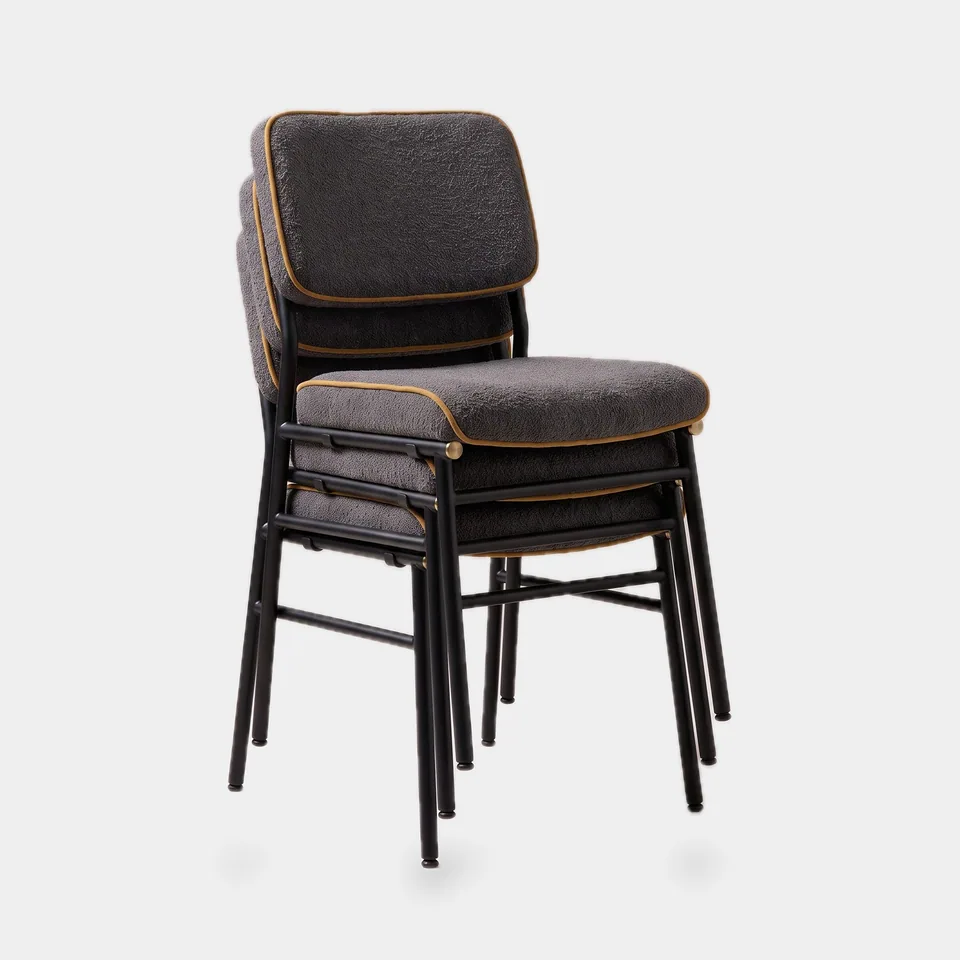
| Chairs and stools | Individually wrapped; stackable chairs shipped stacked with protective layers |
| Table tops | Edge protection, rigid carton; stone and sintered stone in reinforced cartons or crates |
| Table bases | Separate cartons, hardware bags taped and labelled to the base |
| Host stands and panels | Flat-packed with hardware kit and install sheet in the first carton |
| Spares | Packed as a separate, clearly marked carton per store |
A hardware bag should always be labelled with the item code it belongs to. Loose bolts in a container are the most common cause of a lost install day.
How do you plan containers across several stores?
Containers fill by volume. A store kit's packed volume, measured in cubic meters, decides how stores share containers:
| Situation | Typical plan |
|---|---|
| Large store, kit fills most of a 40 ft high cube | One store per container |
| Two small stores opening within a few weeks in the same region | Two stores per container, loaded in store order |
| Store kit slightly larger than one container | One container plus a share of another, or reduce volume with flat-pack items |
| Staged opening (dining first, patio later) | Phased deliveries, phase 2 combined with another store's shipment |
When stores share a container, load one store behind the other, never mixed, with a visible divider and a load plan that lists each store's cartons. The receiving warehouse can then split the container quickly. Furniture designed to pack small - like the NestPack Booth - changes how many stores fit in a container.
When do phased deliveries make sense?
Phasing splits a store's furniture into two or more deliveries. It is useful when:
- The site cannot store the whole kit securely before install
- The opening is staged (main dining room first, patio or private dining later)
- A portion of the furniture is custom and on a longer lead time
- Containers can be filled more efficiently by combining phases across stores
Each phase gets its own kit list, carton numbering and packing list, and the store's master list shows which phase each item is in. Phasing adds handling and coordination, so keep it to clear, named phases.
Step-by-step: from order to installed store
- Issue the store kit list with the order - items, revisions, quantities, zones, phases and delivery address.
- Confirm the kit - the manufacturer returns a confirmed kit list with carton counts and packed volume.
- Agree the container plan - which stores and phases ship together, and on which sailing.
- Pack and label - cartons labelled per the standard; first carton of each item contains its hardware and install sheet.
- Pre-shipment inspection - count cartons per store, check labels, photograph the load sequence.
- Send documents - packing list per store, load plan, commercial invoice, photos.
- Receive - scan or check cartons against the store packing list; note damage on the delivery receipt before signing.
- Stage by zone - move cartons to their zones using the zone field on the label.
- Install - follow install sheets and run/position numbers; level and fix.
- Close out - record shortages or damage by item code and revision, and order replacements against the same codes.
What should a store packing list include?
A one-page summary followed by item lines: store, PO, phase, total cartons, total volume and weight; then for each item code - description, revision, quantity, carton numbers, zone. The install crew should be able to tick off each line.
Common mistakes
- Labels on one side only, unreadable in a stack.
- Mixing two stores in a container without a divider or load plan.
- Hardware shipped loose or in unlabelled bags.
- No carton count per store, so shortages are found on install day.
- Signing a clean delivery receipt without checking for visible damage, which weakens a claim.
- Changing quantities after packing without reissuing labels and lists.
- Treating spares as part of the dining room kit, so they get installed instead of stored.
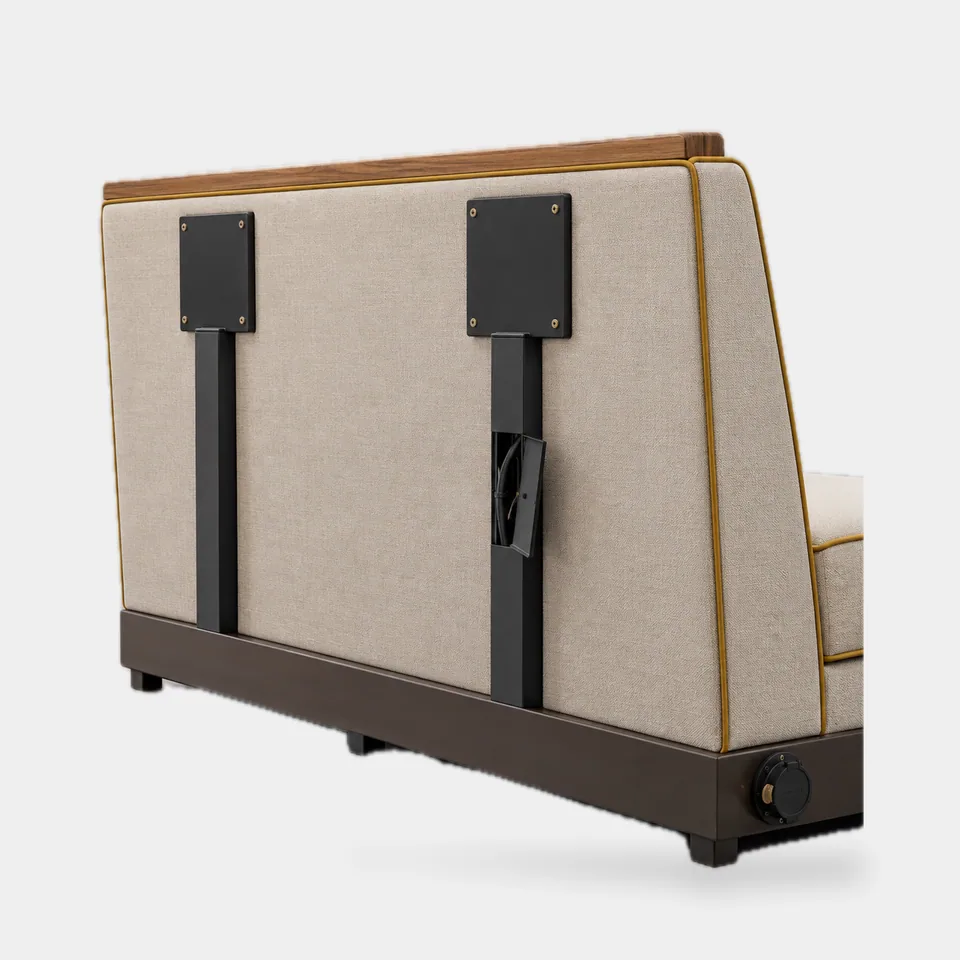
Our Modular Booth System and Program Side Chair carry stable item codes and revisions, which makes labels, packing lists and reorders consistent across every store.
FAQ
What is the difference between kitting and consolidation?
Kitting groups and labels furniture by store (and phase) at the factory. Consolidation combines several shipments - from one or several suppliers - into one container or delivery. Kitting makes consolidation easy, because each store's cartons are already identifiable.
Should we use barcodes or QR codes on furniture cartons?
Either works if your receiving process can scan them. The code should encode store, item code, revision and carton number. Always keep the same information in readable text for sites without scanners.
Can furniture for two stores share one container?
Yes, often efficiently, when openings are close and in the same region. Load the stores in sequence, not mixed, include a load plan, and make sure the warehouse that splits the container has both stores' packing lists.
How much spare furniture should ship with each store?
Many chains hold spares regionally rather than in every store. If spares do ship with the store, pack them separately and label them as spares - typically a few chairs, seat pads and wear parts for the store's booths.
Tell us your store formats, how many openings are planned in the next 12-24 months and where they are. We will come back with a package proposal, unit costs per format and a sample plan.
Request a quote