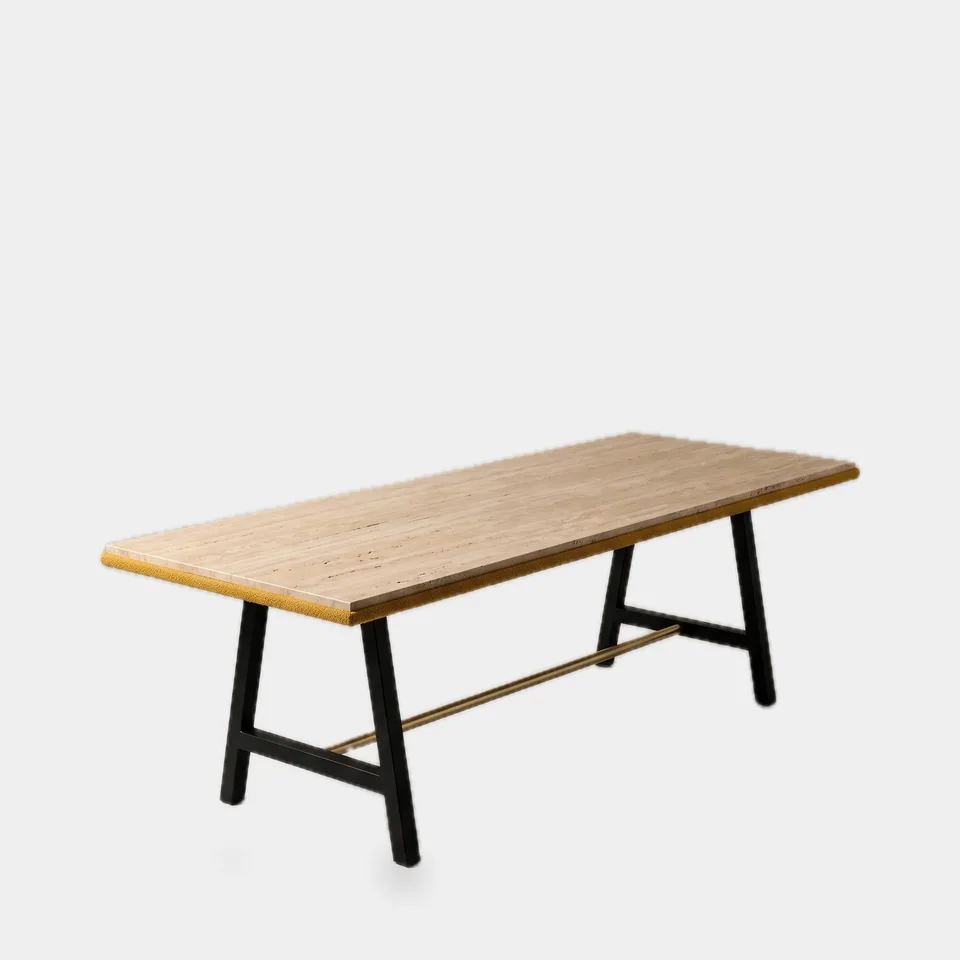
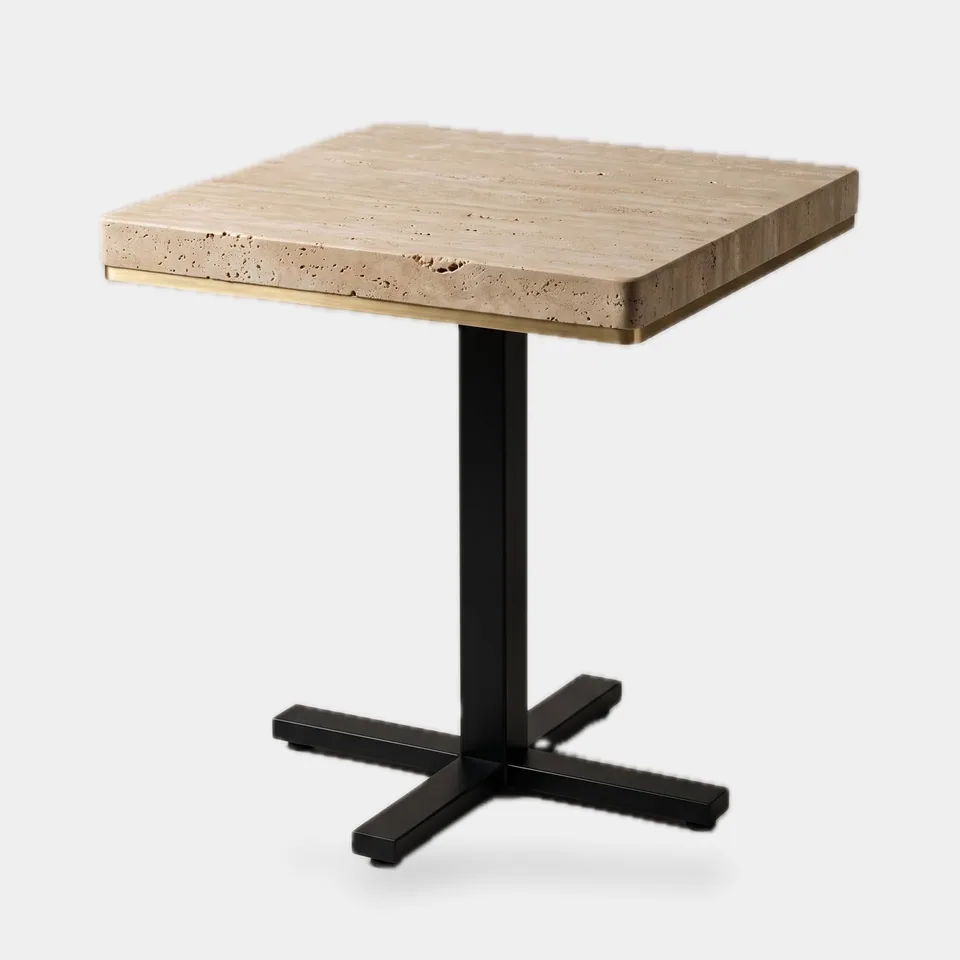
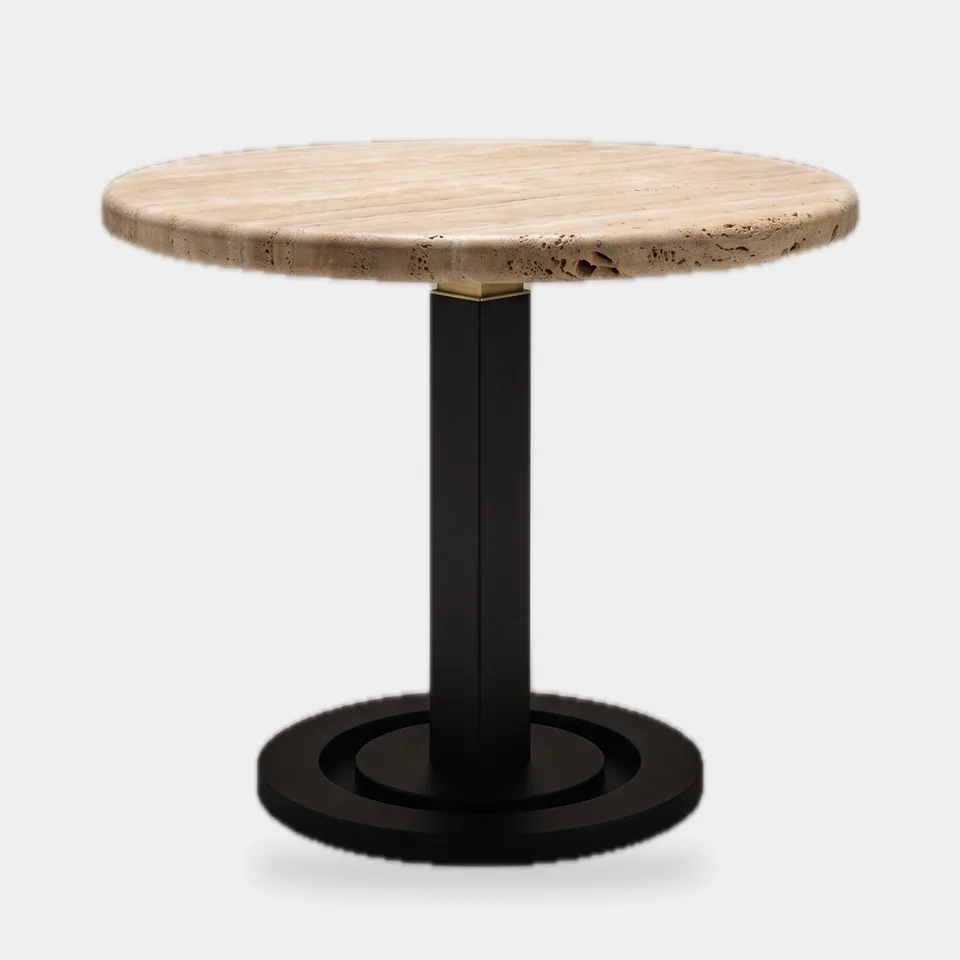
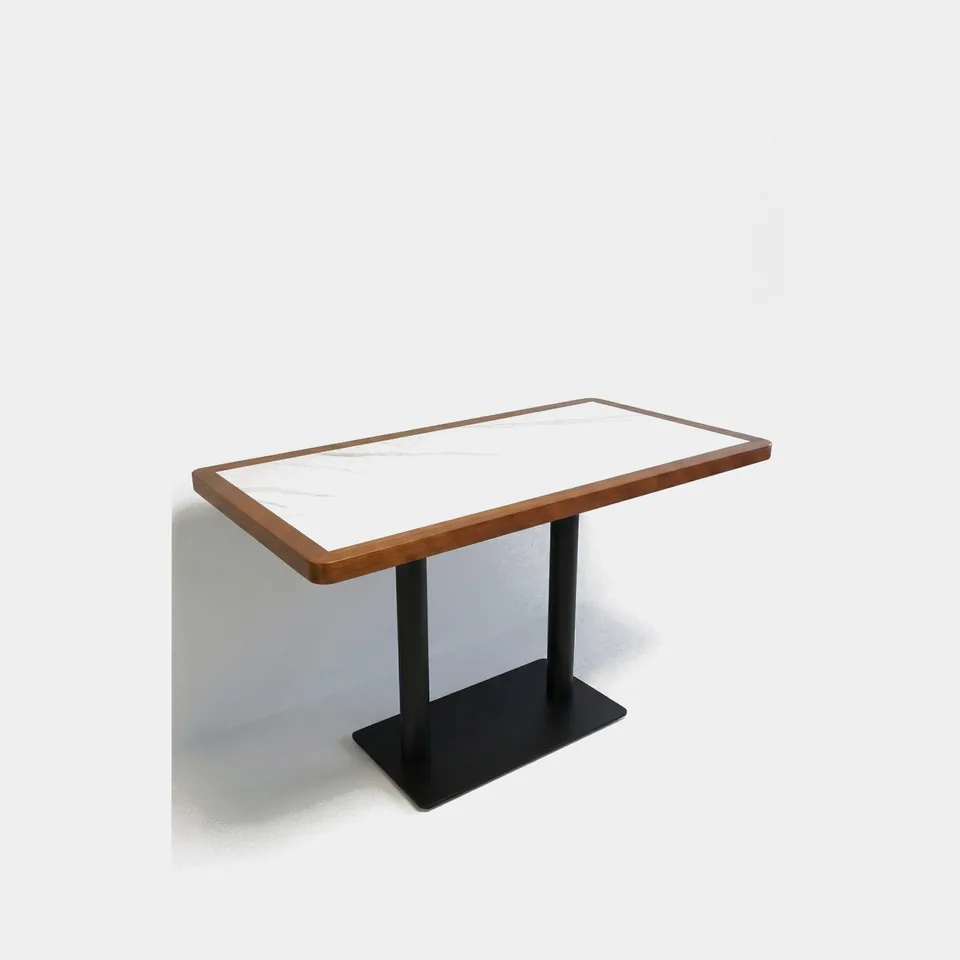
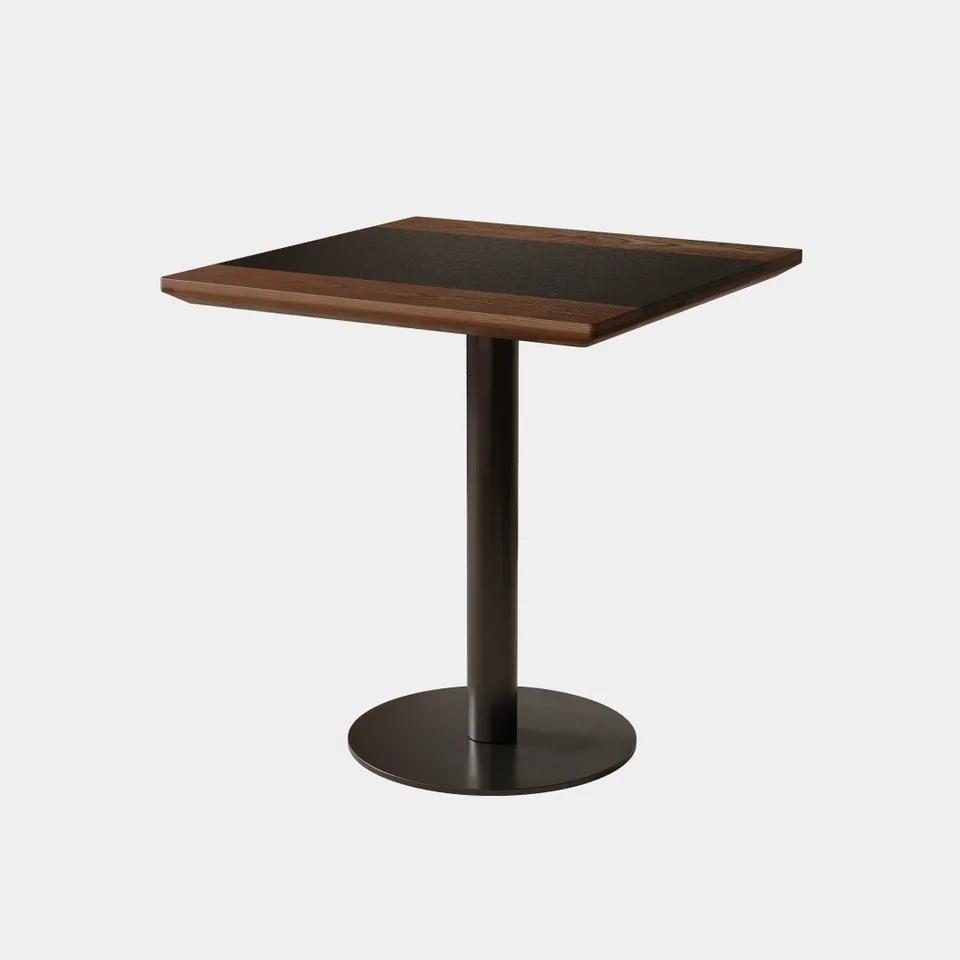
A table program is mostly a base program. Tops change with each store's mix of two-tops, four-tops and larger parties; bases should not. Our tables are designed so one column and two foot styles carry most top sizes at dining, counter and bar heights.
Standard top sizes and heights
| Top | Seats | Height options |
|---|---|---|
| 24 x 30 in (61 x 76 cm) | 2 | Dining 30 in (76 cm) |
| 30 x 30 in (76 x 76 cm) | 2-4 | Dining, counter 36 in (91 cm), bar 42 in (107 cm) |
| 36 in (90 cm) round | 4 | Dining, counter |
| 30 x 48 in (76 x 122 cm) | 4 | Dining (twin base) |
| 36 x 94 in (90 x 240 cm) | 8-10 | Communal, dining |
Bases and stability
Single-column bases use a flat steel column with a cross or disc foot; twin-post bases carry larger tops. All bases include adjustable levelers - wobbling tables are one of the most common guest complaints, and floors in new stores are rarely flat. Booth tables should use pedestal bases so knees and feet are clear.
Accessible tables
ADA 2010 requires at least 5 percent of seating spaces at dining surfaces to be accessible, with dining surfaces 28-34 in (711-864 mm) high and knee clearance of at least 27 in (686 mm) high, 30 in (762 mm) wide and 19 in (483 mm) deep. We draw the accessible table option into each store format so it is ordered every time, not added later.